THE PRACTICE / SIX WAYS INA thought.
A form.
A departure.
We explore how a visual idea can hold together while moving between a letter, an image, a page and a screen.
Type, shape,
surface,
sequence.
01 / DISCIPLINEVisual identities
A recognisable identity is a set of relationships, not only a mark. We explore how type, colour, shape and repetition can hold a point of view across different scales and materials.
What should remain familiar when the composition changes?
See a related study ↗Experimental typography
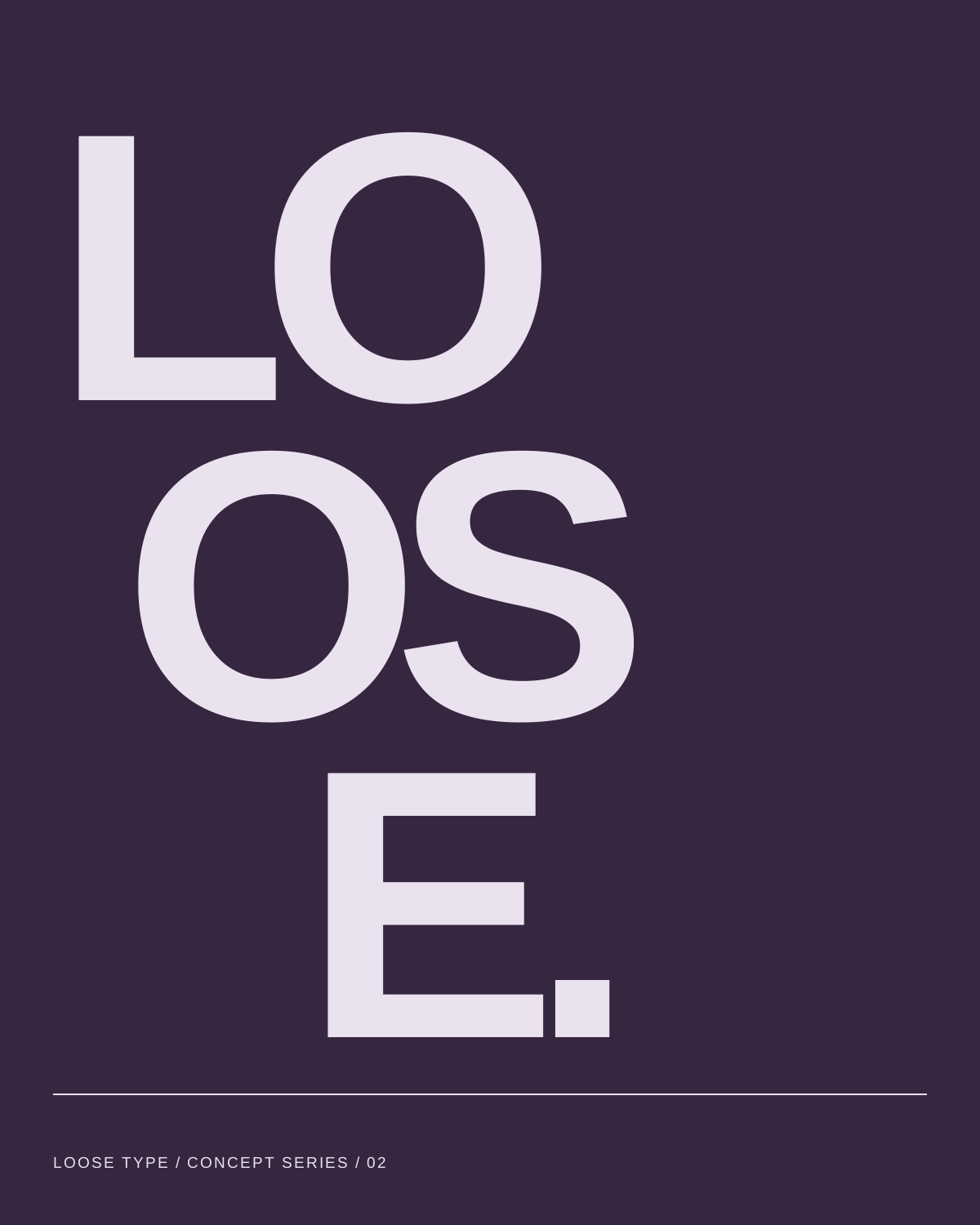
Letters carry language and behave as shapes. We use scale, spacing, interruption and arrangement to examine what happens between the act of reading and the act of looking.
How far can a word move before it becomes an image?
See a related study ↗Art direction
Art direction gives a collection of choices a shared intention. References, light, colour and composition are considered together, so each image belongs to the same visual question.
Which decisions belong to this particular idea?
See a related study ↗Image making
We build images from forms, surfaces and the relationships between them. A composition might begin as vector geometry or a constructed material image; the method follows the quality of the question.
What does the image reveal when its subject is reduced?
See a related study ↗Editorial systems
A page is a way of arranging attention. We develop grids, captions, sequences and typographic hierarchies that make a collection legible without flattening its differences.
How can a system hold variety without becoming noise?
See a related study ↗Digital compositions
A composition on a screen can change state. We explore small, intentional interactions that let a visitor rearrange, compare or read a visual idea in another way.
What becomes visible when the arrangement can change?
See a related study ↗One practice.
Many possible
readings.
The studies here are a working collection, not a catalogue of client commissions. They make the visual approach tangible: start with a question, develop a language, compare variations, and pay attention to what changes.
Read the studio notes ↗